Structure#
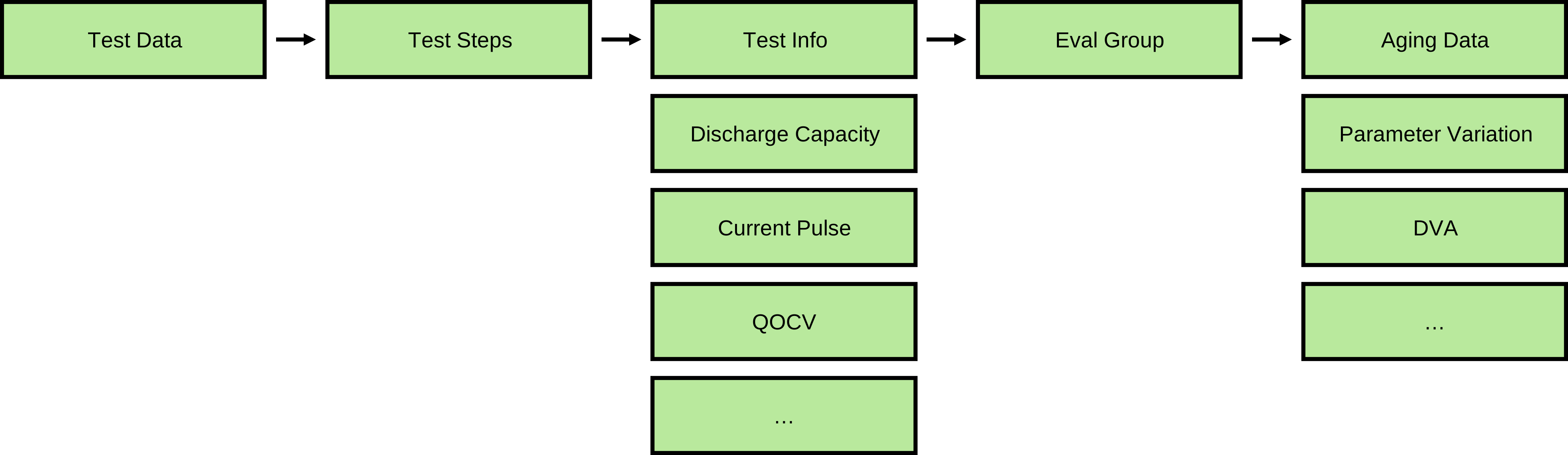
Data analysis is divided into multiple steps that are described in more detail in the sections below. A simple example of using these steps on a data file is given in the Jupyter notebook examples/simple.ipynb.
Import test data#
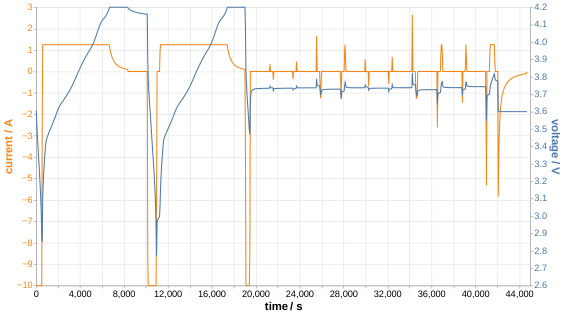
In order to import test data from a file, the structure of the data must be known. This is encapsulated in the DataSpec class.
By default, bdat will attempt to parse a file using a list of known data formats, including the Battery Data Format.
Additional formats can be added by extending the function bdat.dataimport.import_rules.get_dataspec().
For files using one of the known formats, the DataSpec object can be created by calling get_dataspec():
import pandas as pd

batterytype = bdat.BatterySpecies("My Battery Type", capacity=1.0)
battery = bdat.Battery("Cell 0001", type=batterytype)
cycling = bdat.Cycling("Initial checkup", object=battery)
df = pd.read_parquet("testdata.parquet")
dataspec = bdat.get_dataspec(cycling, df)
data = bdat.CyclingData(cycling, df, dataspec)
Alternatively, a custom data format can also be constructed before importing the data:
import pandas as pd

batterytype = bdat.BatterySpecies("My Battery Type", capacity=1.0)
battery = bdat.Battery("Cell 0001", type=batterytype)
cycling = bdat.Cycling("Initial checkup", object=battery)
df = pd.read_parquet("testdata.parquet")
dataspec = bdat.DataSpec(
    "neware-converted",
    durationColumn=bdat.TimeColumnSpec("Time##T_+01_00", bdat.Timestamp()),
    currentColumn=bdat.ColumnSpec("Current#A#D"),
    voltageColumn=bdat.ColumnSpec("Voltage#V#D"),
    chargeSpec=bdat.SeparateColumns(
        bdat.ColumnSpec("Charge Capacity#Ah#D"), bdat.ColumnSpec("Discharge Capacity#Ah#D")
    ),
)
data = bdat.CyclingData(cycling, df, dataspec)
Segment data into steps#
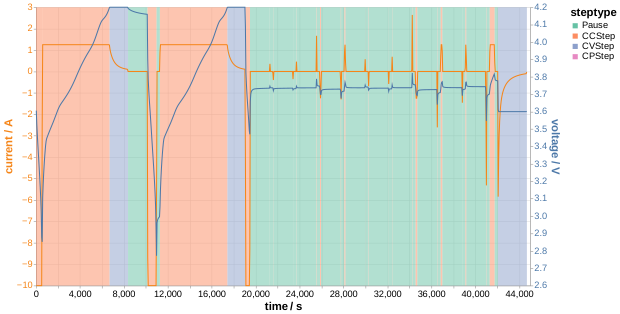
The first analysis step after importing the data is to separate it into steps.
This is done using bdat.steps.find_steps().
The function returns a Steplist object that containst a list of steps with metadata such as duration, current, and voltage:
steplist = bdat.steps.find_steps(data)
Find and evaluate patterns#
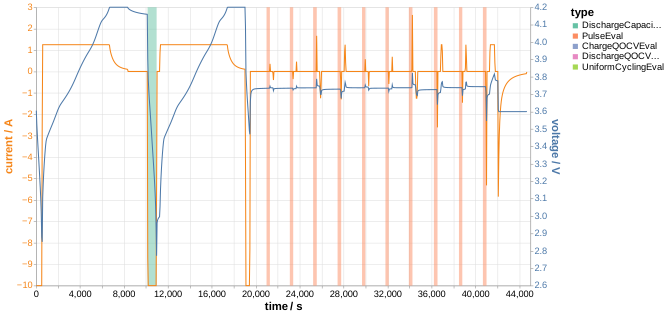
In a second step, the list of steps is searched for patterns that correspond to specific test sequences.
A list of available patterns can be seen in the bdat.resources.patterns documentation.
The bdat.patterns.find_patterns() function will search a Steplist object for a list of patterns and return results for all matches:
patterntypes = [
    bdat.patterns.Captest(),
    bdat.patterns.Testinfo(),
    bdat.patterns.UniformCycling(),
]
testeval = bdat.patterns.find_patterns(steplist, patterntypes, data)
This returns a TestEval object containing a list of PatternEval instances that hold information about the detected matches.
Examples for further usage of this data are given in the example notebooks.